The Discovery
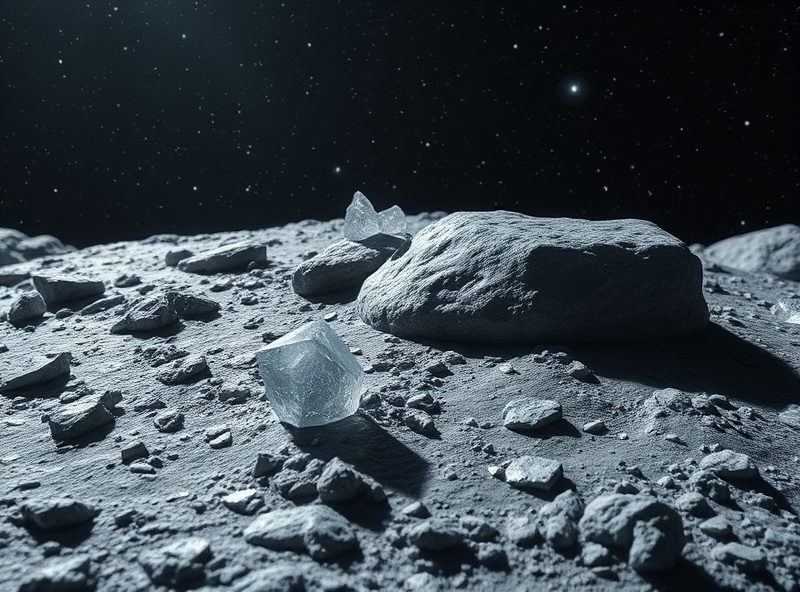
The Bennu samples contain hydrated minerals—minerals that formed in the presence of liquid water. These minerals are a key piece of evidence that Bennu's parent body was an ocean world in the early solar system.
What the Minerals Tell Us
- • Hydrated Silicates: Minerals like phyllosilicates (clay minerals) that only form in the presence of water. Their presence proves the parent body had liquid water.
- • Magnesium-Sodium Phosphate: This mineral is strong evidence for the interaction between water and rock in the parent body's interior.
- • Temperature Indicators: The mineralogy indicates water was present at moderate temperatures, compatible with liquid oceans.
- • Timing: The minerals formed early in the solar system's history, within the first few million years—when the parent body was still geologically active.
The Picture: A Wet Early Solar System
These discoveries confirm that water was not rare in the early solar system. Bennu's parent body—a carbonaceous asteroid that formed in the outer solar system—had abundant liquid water. This water may have been crucial for:
- → Chemical reactions that produced complex organic molecules
- → Dissolving and concentrating organic compounds
- → Enabling the formation of biomolecules like RNA
If such water-rich asteroids delivered both water and organic molecules to Earth, they may have jumpstarted life's emergence on our planet.
Key Research Papers
- → "Hydrated minerals in Bennu samples reveal ancient aqueous alteration" – Walsh et al., Science (2024)
- → "Phosphate minerals and evidence for aqueous processes in the Bennu parent body" – Yang et al., Geochimica et Cosmochimica Acta (2024)
- → See NASA's OSIRIS-REx mission page for full publication list